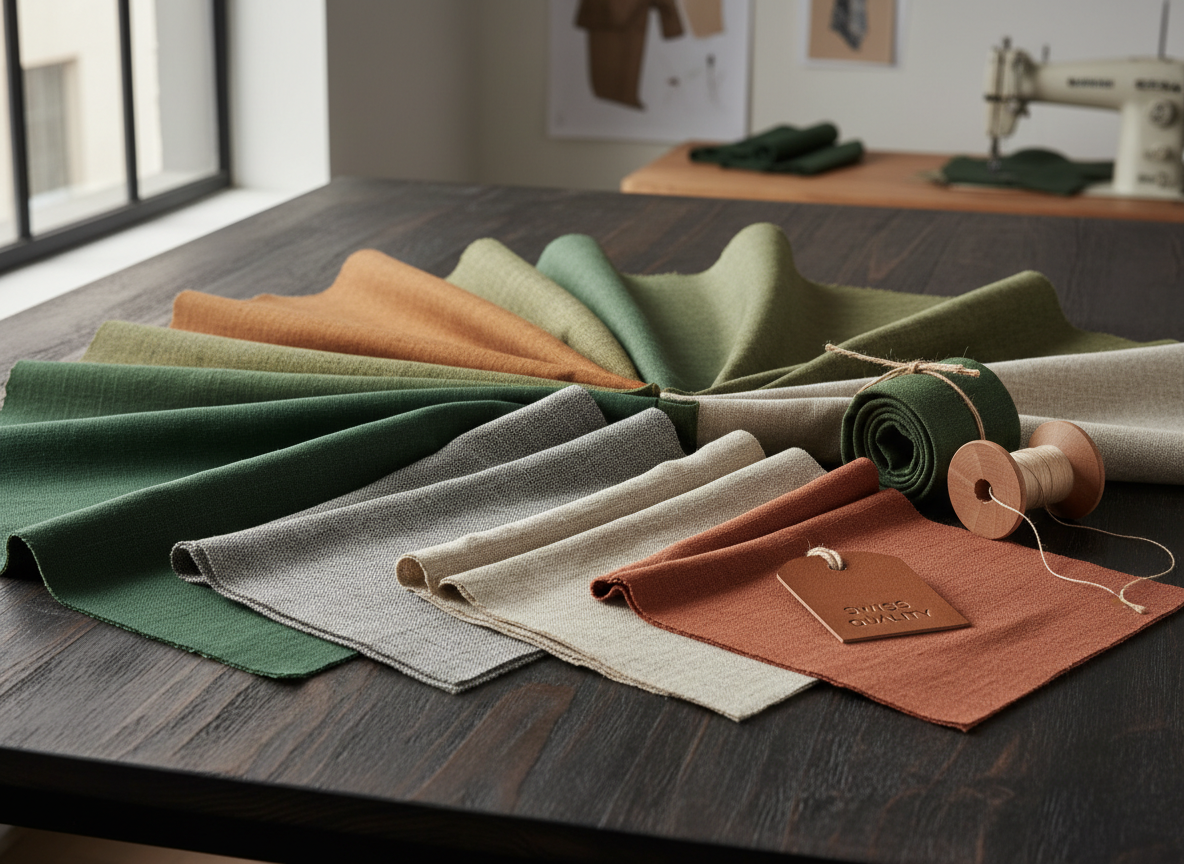
The corporate uniform industry is undergoing a quiet revolution. As businesses across Europe commit to environmental responsibility, the demand for sustainable workwear has surged — and the fabrics behind these garments are at the heart of the transformation.
Why Sustainability Matters in Workwear
Corporate uniforms are produced in volume. A single hotel chain may order thousands of garments per year. Multiply that across healthcare, hospitality, and industrial sectors, and the environmental footprint becomes significant.
Choosing sustainable fabrics isn't just an ethical decision — it's a business one. Clients, employees, and regulators increasingly expect brands to demonstrate environmental responsibility. Sustainable workwear signals that your company takes its values seriously.
The Leading Eco-Friendly Fabrics
1. Organic Cotton
Grown without synthetic pesticides or fertilisers, organic cotton uses up to 91% less water than conventional cotton. It's soft, breathable, and ideal for hospitality and front-of-house uniforms where comfort matters.
2. Recycled Polyester (rPET)
Made from post-consumer plastic bottles, recycled polyester delivers the same durability and wrinkle resistance as virgin polyester — with a fraction of the carbon footprint. It's particularly suited for industrial and outdoor workwear.
3. Tencel™ (Lyocell)
Produced from sustainably sourced wood pulp in a closed-loop process, Tencel is silky smooth, moisture-wicking, and biodegradable. It's gaining popularity in healthcare uniforms where hygiene and comfort are paramount.
4. Hemp Blends
Hemp requires minimal water and no pesticides. Blended with organic cotton, it creates durable, antimicrobial fabrics perfect for workwear that needs to withstand heavy use.
Performance Without Compromise
A common misconception is that sustainable fabrics sacrifice performance. The reality is the opposite. Modern eco-friendly textiles match — and often exceed — conventional materials in durability, colour retention, and comfort.
At Prince International, we source sustainable fabrics from certified European mills that meet OEKO-TEX, GOTS, and GRS standards. Every garment undergoes the same rigorous quality control, regardless of fabric origin.
The Swiss Advantage
Switzerland's reputation for precision and ethical standards extends to apparel manufacturing. Swiss manufacturers are uniquely positioned to deliver sustainable workwear because of strict environmental regulations, proximity to premium European fabric mills, and a culture of quality over quantity.
When you partner with a Swiss manufacturer for your corporate uniforms, you're choosing a supply chain built on transparency and accountability.
Making the Switch: A Practical Guide
- 1
Audit your current uniforms
Identify which garments have the highest volume and environmental impact.
- 2
Request sustainable fabric samples
Compare organic cotton, rPET, and Tencel options for each garment type.
- 3
Pilot with one department
Test sustainable uniforms with a small team before a full rollout.
- 4
Communicate the change
Share your sustainability commitment with employees and customers — it strengthens brand loyalty.
The Bottom Line
Sustainable workwear is no longer a niche trend — it's the new standard. Businesses that invest in eco-friendly uniforms today are future-proofing their brand, reducing their environmental impact, and meeting the expectations of a conscious market.
Ready to explore sustainable options for your corporate uniforms? Prince International offers end-to-end guidance — from fabric selection to final delivery — with Swiss precision and ethical commitment.